When lunchtime rolls around in Korea, one question echoes across offices and neighborhoods: “What should we eat today?” Among countless options, gukbap often wins without much debate. It’s simple, hearty, and comforting — a warm bowl of soup with rice that fits seamlessly into everyday life. The steam rising from the bowl, the rich aroma filling the air, and the first spoonful of hot broth offer a moment of pause in the middle of a busy day. For many Koreans, gukbap is not just food. It’s a part of their daily rhythm.
The history of gukbap stretches back centuries. During the Joseon Dynasty, beef bone soups like seolleongtang and gomtang were staples of both royal and commoner tables. Seolleongtang is said to have originated from large communal pots prepared after royal ancestral rites, where leftover beef parts were simmered for hours and shared with the people. The result was a milky-white broth with a delicate, clean taste — a reflection of the calm and refined culinary culture of Seoul and its surrounding regions.
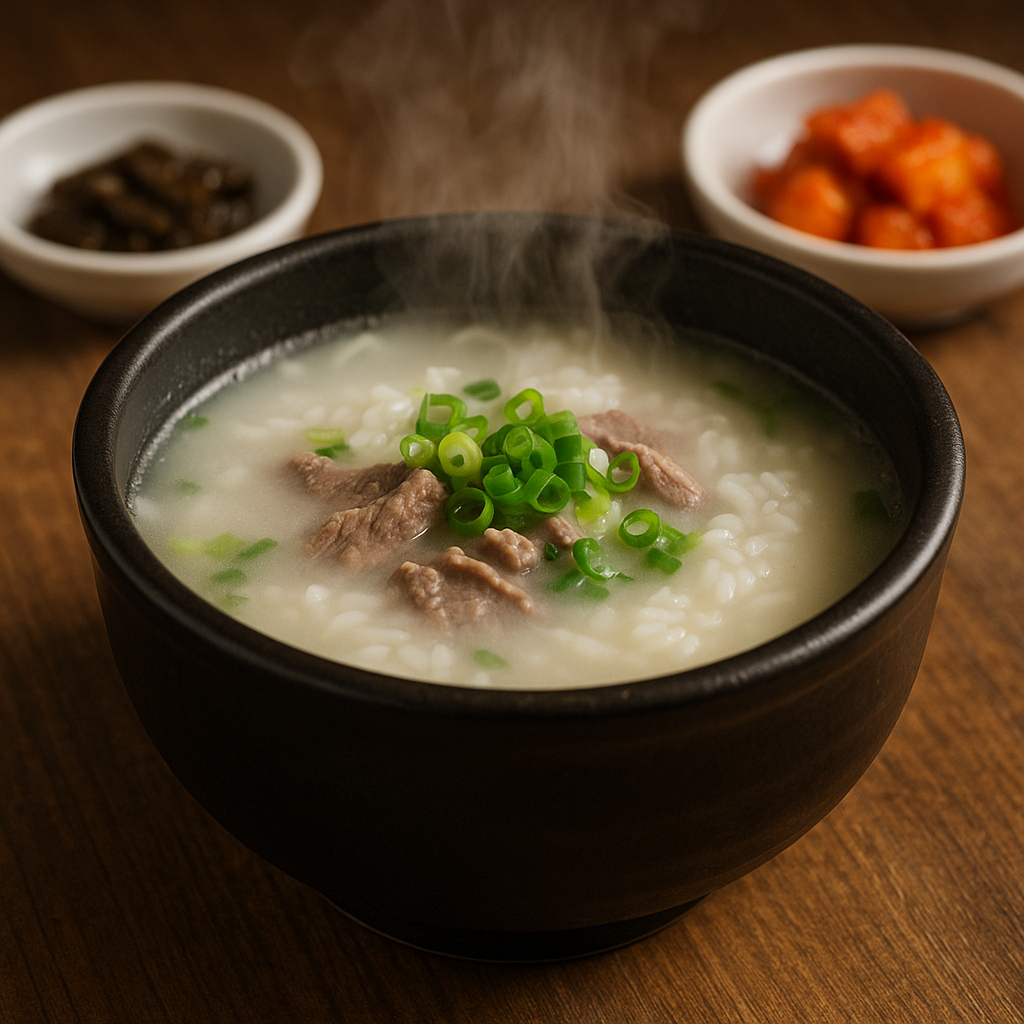
After the Korean War, gukbap evolved dramatically. In the southern city of Busan, where refugees gathered, pork was more affordable and easier to source than beef. People began making dwaeji gukbap (pork soup with rice) by boiling pork bones and offal for hours to create a rich, cloudy broth. Rice was mixed directly into the soup, making it a one-bowl meal — simple, nourishing, and inexpensive. Side dishes like salted shrimp and seasoned chives added brightness to the flavor. Over time, pork gukbap became a beloved symbol of Busan’s working-class spirit and resilience.
In Jeolla Province, known for its bold flavors and generous hospitality, gukbap takes on a spicier form. Garlic and chili powder are used generously, creating soups like yukgaejang gukbap and blood sausage soups with a deep red hue and a warming kick. Eating a bowl of this in the colder months feels like wrapping yourself in a blanket of spice and heat — it’s both a meal and an embrace.
Up in Gangwon Province, where winters are harsh, gukbap reflects the rugged mountain lifestyle. Blood, garlic, and vegetables are combined in clear but slightly spicy broths, creating simple, unpretentious flavors that warm you from the inside out. These bowls are often eaten quickly, with rice already mixed in, much like how farmers or laborers would have eaten after a morning’s work.
Meanwhile, Chungcheong Province offers gukbap that’s neither too spicy nor too mild. With clear broths and clean flavors, these bowls mirror the region’s understated and gentle character. Eating Chungcheong-style gukbap feels like catching up with an old friend — familiar, honest, and quietly comforting.
What makes gukbap special is that it’s not just one dish. Across Korea, each region has its own version, shaped by climate, available ingredients, history, and people’s ways of life. The clean broth of Seoul, the hearty pork soup of Busan, the fiery spice of Jeolla, the rustic bowls of Gangwon, and the understated warmth of Chungcheong — together, they paint a vivid culinary map of Korea.
Sitting in a bustling lunch spot, with steam rising and conversations flowing, a bowl of gukbap offers more than just nourishment. It connects people to places, to seasons, and to memories. Each spoonful carries the stories of different regions, generations, and lives — all in one warm, humble bowl.
'일상의 기록' 카테고리의 다른 글
| [다시 꺼내 읽다] 초한지 다시 읽다. (0) | 2025.10.12 |
|---|---|
| 벽을 나누지 않는 도시 — 베트남 맞벽 건축의 철학 (1) | 2025.10.11 |
| 좁고 길게, 베트남의 집이 말해주는 도시의 지혜 (0) | 2025.10.09 |
| Soondae Guk — A Bowl of Warmth in Korean Everyday Life (0) | 2025.10.08 |
| 김이 모락모락, 순댓국에 담긴 이야기 (0) | 2025.10.07 |