It’s lunchtime at the office.
Someone asks, “What should we eat today?”
After a brief silence, someone else suggests, “How about soondae guk?”
Without hesitation, the answer comes: “Yeah, let’s do that.”
In Korea, this simple exchange happens countless times, especially on chilly days when people crave something warm, filling, and familiar. Soondae guk — a steaming bowl of Korean blood sausage soup — isn’t just food. It’s a part of daily life.
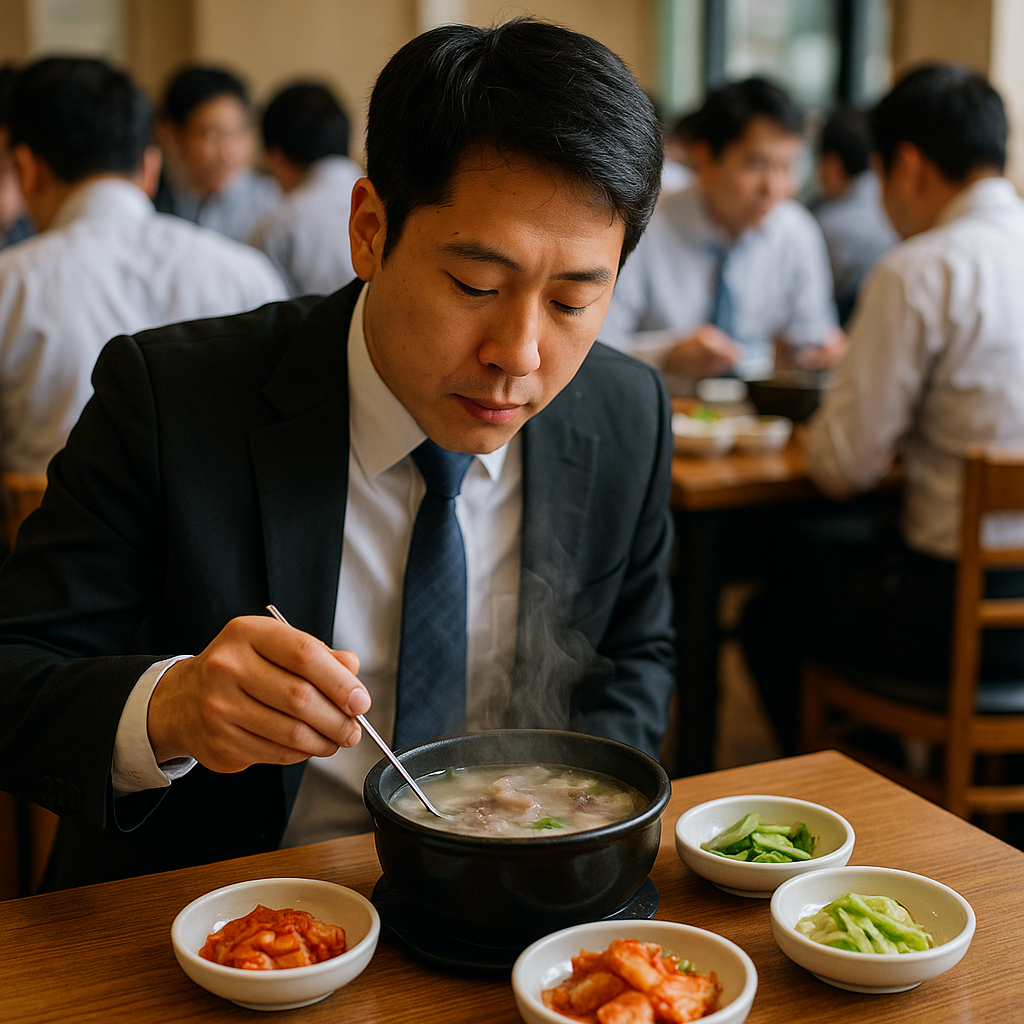
One weekend, I went out for lunch with my child. As we wandered around our neighborhood, I noticed a small soondae guk restaurant tucked into a side street. Normally, I would have walked past it without a second thought. But that day, the steam rising from the doorway caught my eye.
The moment we stepped inside, the rich aroma of simmering broth wrapped around us like a blanket. That deep, savory scent instantly took me back to childhood memories of visiting the market with my father. What was supposed to be a simple meal turned into a quiet encounter with the past.
The origins of soondae guk can be traced back to traditional village life, when people raised pigs and made sure nothing went to waste. On the day of slaughter, villagers would gather, share the meat, and stuff the cleaned intestines with glutinous rice or noodles to make soondae (Korean blood sausage). The leftover bones, meat, and sausages would be simmered together, creating a rich, warming soup.
Even in 19th-century cookbooks like Gyuhap Chongseo (1809), recipes using intestines are mentioned, showing how deeply this tradition runs. Soondae guk was born not from luxury but from practicality, communal life, and resourcefulness.
The modern version of soondae guk emerged after the Korean War. Refugees who had settled in Busan and the southern regions needed affordable meals that could feed many. They gathered cheap cuts, bones, and offal, simmered them for hours, and added soondae to the broth. The result was hearty, filling, and inexpensive — perfect for workers, families, and anyone who needed warmth during hard times. By the 1980s, specialized soondae guk restaurants appeared across the country, each region developing its own style.
In Busan and Gyeongnam, the soup is clear, with rice served already in the bowl — similar to what people call dwaeji gukbap. In Seoul and central regions, the broth is milky and rich, served with soondae and offal separately, often accompanied by radish kimchi and salted shrimp.
In Gangwon Province, blood is added generously, with bold garlic flavors and a slightly spicy kick.
These subtle differences — the color of the broth, the ingredients, the way the rice is served — reflect Korea’s regional diversity and culinary identity, all within a single bowl.
Sitting at the table with my child, I took my first spoonful. The deep, meaty flavor spread through my body like warmth from the inside out. My child hesitantly picked up a piece of soondae, took a small bite, made a funny face, and then smiled. I couldn’t help but laugh too.
For me, soondae guk isn’t just a dish — it’s tied to memories of my father, the markets of my childhood, and now, a quiet moment shared with my own child. The flavor may stay the same, but it connects different generations through something as simple as a shared meal.
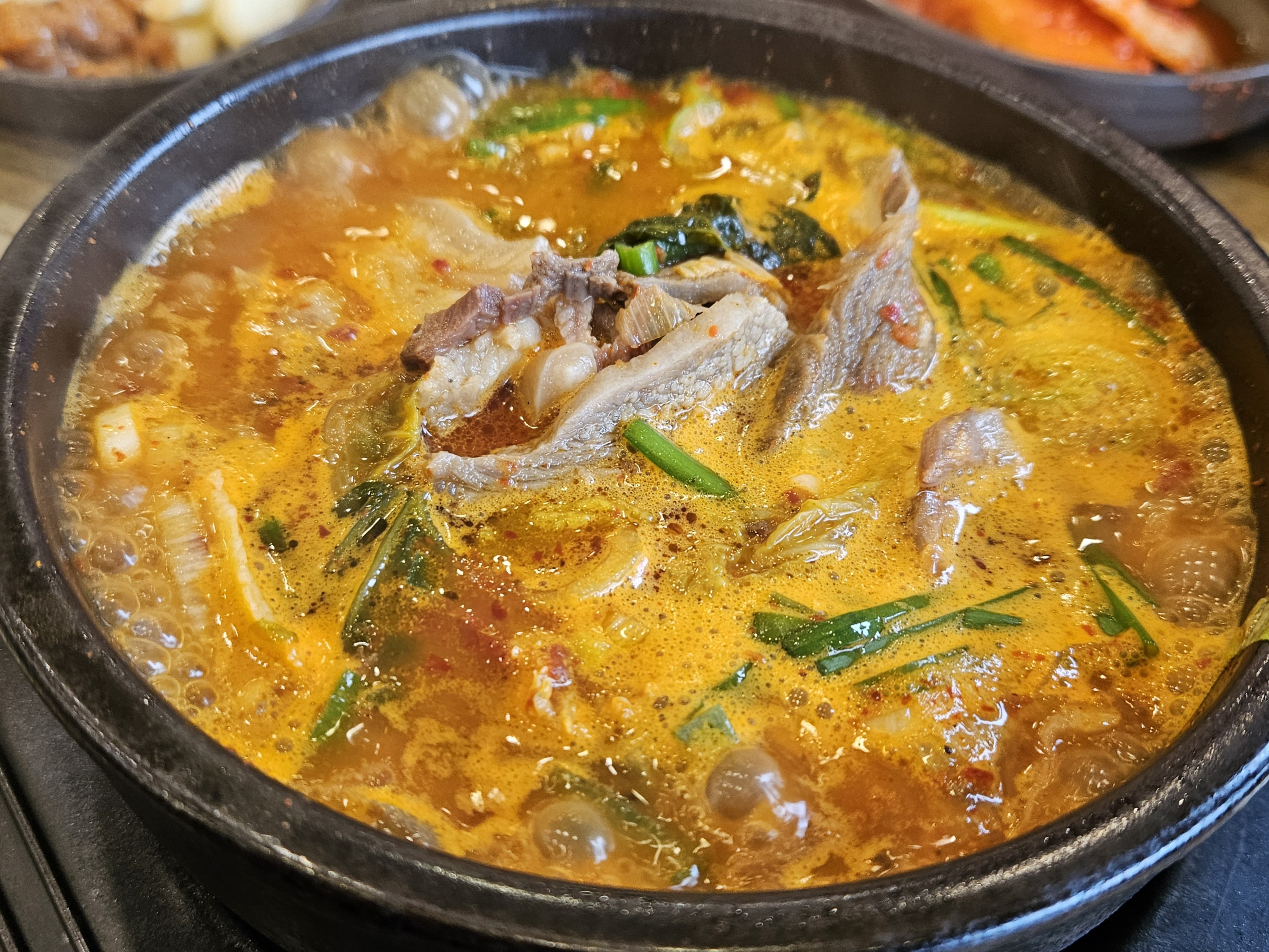
On chilly days, when the wind makes you pull your jacket a little tighter, there’s nothing quite like a steaming bowl of soondae guk. The moment the hot broth touches your lips, warmth spreads through your body, and beads of sweat gather on your forehead. It’s not just lunch. It’s comfort, memory, and culture — all in one bowl.
'일상의 기록' 카테고리의 다른 글
| Gukbap: A Warm Bowl of Korean Everyday Life (0) | 2025.10.10 |
|---|---|
| 좁고 길게, 베트남의 집이 말해주는 도시의 지혜 (0) | 2025.10.09 |
| 김이 모락모락, 순댓국에 담긴 이야기 (0) | 2025.10.07 |
| 명절 귀성길의 풍경, 그리고 세대의 변화 (0) | 2025.10.05 |
| 베트남에는 왜 ‘추석 연휴’가 없을까? (1) | 2025.10.04 |